
Cross-Country Car Shipping Cost: 2026 Price Guide
- US Car-Go Freight
- 12 hours ago
- 6 min read

A coast-to-coast move can put hundreds of extra miles on a car before you even arrive. For most drivers, cross-country car shipping costs less than driving when you add fuel, hotels, meals, time off work, and vehicle wear.
In 2026, a typical cross-country shipment for a standard sedan on an open carrier often falls between $1,100 and $1,800. However, the final price depends on your route, vehicle, schedule, and transport choice.
Knowing what moves a quote up or down makes it easier to budget without unpleasant surprises.
Key Takeaways
Most standard cars cost about $1,100 to $1,800 to ship 2,500 to 3,000 miles on an open carrier.
Enclosed transport usually costs 30% to 70% more because it offers protection from weather and road debris.
Popular routes, flexible pickup dates, and terminal-adjacent locations can reduce your price.
Large trucks, SUVs, inoperable vehicles, and urgent bookings typically cost more.
A quote is a market-based estimate, so carrier availability and fuel conditions can change the final rate.
Typical Cost to Ship a Car Across the Country
The average price to ship a car across the country depends more on the lane than the map distance alone. A 2,700-mile route between major cities may cost less than a shorter trip that begins or ends in a remote location.
For 2026 planning, expect open transport for a running sedan or compact SUV to cost roughly $0.45 to $0.70 per mile on a long route. The per-mile rate usually drops as the distance grows. Short trips have fixed loading, scheduling, and paperwork costs that raise their per-mile price.
The figures below are planning estimates, not guaranteed rates. Carrier capacity, fuel prices, season, vehicle dimensions, and pickup access can change a quote quickly.
Distance or Common Route | Open Transport Estimate | Enclosed Transport Estimate |
|---|---|---|
1,500 to 2,000 miles | $900 to $1,400 | $1,300 to $2,100 |
2,000 to 2,500 miles | $1,000 to $1,600 | $1,500 to $2,400 |
2,500 to 3,000 miles | $1,100 to $1,800 | $1,600 to $2,800 |
New York to Los Angeles | $1,200 to $1,900 | $1,800 to $3,000 |
Seattle to Miami | $1,300 to $2,000 | $1,900 to $3,100 |
Chicago to San Diego | $1,100 to $1,700 | $1,600 to $2,600 |
A small sedan shipped from Los Angeles to Florida might land near the middle of the range. A lifted full-size pickup headed to a rural address could sit well above it.
The lowest advertised price isn't always the cheapest shipment. A realistic quote is more likely to attract a carrier without last-minute price changes.
What Changes Your Cross-Country Car Shipping Quote?
Every auto transport quote combines distance with the practical work of moving your particular vehicle. A carrier has limited deck space, limited time, and a route to fill. Those details matter.
Distance and route demand
Longer trips cost more overall, yet busy long-haul corridors can offer better value per mile. Routes linking Los Angeles, Dallas, Chicago, Atlanta, Miami, New York, and Phoenix often have steady carrier traffic.
By contrast, a remote pickup can require a driver to leave a profitable lane. That extra travel time raises the bid. Mountain roads, island access, and low-clearance neighborhoods can also force a meeting point with enough room for a multi-car trailer.
Demand changes throughout the year. Snowbird traffic pushes rates higher on routes into Florida, Arizona, and Southern California during fall and winter. Summer relocations, college moves, and holiday weeks can also tighten capacity.
Vehicle size, weight, and condition
A Honda Civic takes less trailer space than a Ford F-250. Larger vehicles occupy more room and may add weight that affects how the driver loads the trailer. Oversize SUVs, heavy electric vehicles, modified trucks, and vehicles with roof racks often cost more.
Let the transporter know if the vehicle doesn't run, brake, steer, or roll normally. Winching an inoperable vehicle onto a carrier adds labor and equipment time. Accurate details protect you from a revised price at pickup.
Personal items can create trouble as well. Auto carriers are not household moving trucks, and extra cargo adds weight and risk. Ask the broker what, if anything, the assigned carrier allows inside the vehicle.
Timing and flexibility
A flexible pickup window is one of the strongest ways to lower a cross-country car shipping cost. Most standard shipments use a pickup window of several days because drivers coordinate multiple vehicles and appointments.
Expedited service narrows that window, but it costs more. Last-minute bookings can also trigger a higher rate because the carrier must find space immediately. Booking one to three weeks ahead usually gives dispatchers more options.
Door-to-door service means the carrier gets as close to your address as safely possible. If the street can't fit a 75-foot truck, you may meet the driver at a nearby shopping center or large parking lot. That small adjustment can keep delivery efficient and avoid access fees.
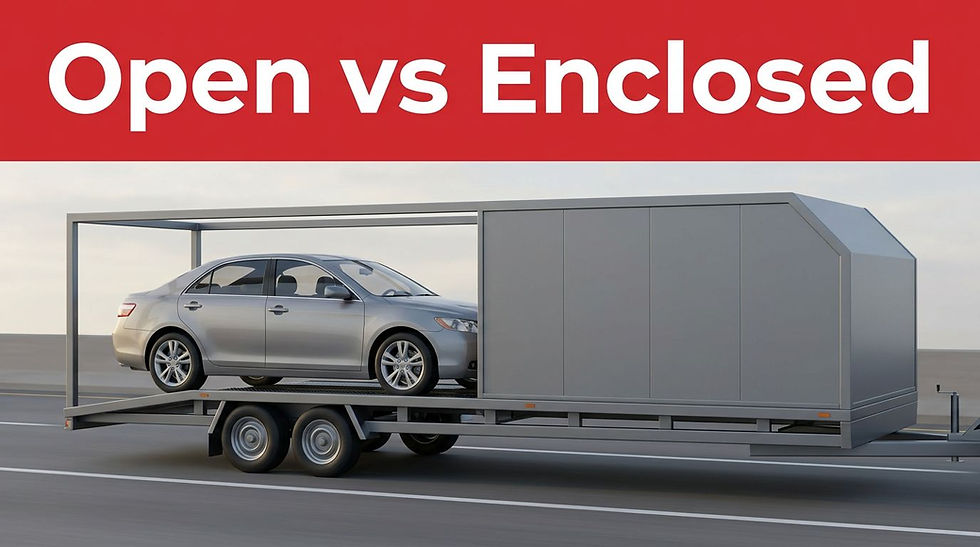
Open vs. Enclosed Car Shipping
Open auto transport is the standard choice for daily drivers, leased vehicles, and most new-car purchases. Cars ride on an open multi-vehicle trailer, the type often seen on interstate highways. It provides secure transport at the lowest common price.
The tradeoff is exposure. Your vehicle may encounter rain, dust, road grime, and normal highway debris. These conditions rarely harm a properly secured car, but they aren't ideal for every vehicle.
Enclosed car shipping uses a covered trailer that shields the vehicle from weather and road debris. It is a strong fit for collector cars, luxury vehicles, exotics, antiques, and cars with custom paint. Many enclosed trailers also offer added handling care and equipment for low-clearance vehicles.
Enclosed vehicle shipping commonly costs $500 to $1,200 more than open shipping on a cross-country lane. The exact premium depends on the vehicle, route, and carrier availability. If a car's value or condition makes exposure unacceptable, the higher price may be sensible.
Some shippers use the terms enclosed vehicle transport and enclosed car shipping interchangeably. Both describe covered auto transport, not a separate service level.
Before confirming any carrier, check its operating details through the FMCSA SAFER Company Snapshot. You should also ask about cargo insurance, pickup timing, cancellation terms, and the inspection process at delivery.
Practical Ways to Lower Shipping Costs
You don't need to accept the first number you receive. A few reasonable choices can make a noticeable difference without putting your car at risk.
First, request quotes early and compare the service details, not only the headline price. Confirm whether each quote includes door-to-door delivery, insurance coverage, standard pickup timing, and any fees for an inoperable vehicle.
Next, offer a wider pickup and delivery window. A driver can combine flexible shipments with others on the same lane, which makes your vehicle easier to place. Avoid booking around major holidays if your schedule allows.
Choose open transport for a normal daily driver. The price difference between open and enclosed vehicle transport is substantial on a 2,500-mile trip. Save enclosed service for vehicles that need the added protection.
Finally, prepare the car before pickup:
Wash it so the driver can record existing marks during the inspection.
Remove toll tags, personal belongings, loose accessories, and aftermarket items.
Leave about one-quarter tank of fuel, unless the carrier gives different instructions.
Keep the keys, title, and registration documents accessible, but don't leave important paperwork in the car.
A thorough bill of lading protects both sides. Review the vehicle condition report at pickup and delivery, then take dated photos from several angles.
Why Quotes Differ Between Companies
Auto shipping is a live transportation market. A broker may post your shipment to a carrier network, while carriers decide whether the offered payment fits their route, available space, and schedule. That is why two quotes for the same car can differ by several hundred dollars.
A very low quote can be a starting offer that fails to attract a driver. If the pickup date approaches, the price may need to rise. On the other hand, a higher quote may reflect a realistic rate for a difficult route or an urgent deadline.
Ask each company direct questions before you book. Find out whether the rate is binding, whether a deposit is required, and when you pay the balance. Also confirm who will contact you during transit and how much notice you'll receive before pickup and delivery.
Final Thoughts on Cross-Country Shipping Prices
A realistic cross-country car shipping cost starts with the right transport type, an accurate vehicle description, and enough scheduling flexibility. Most everyday cars move affordably on open carriers, while enclosed shipping protects high-value vehicles at a higher rate.
Compare complete quotes, not teaser prices, and leave room in your moving budget for seasonal changes. When you're ready to price your route, US Car-Go Freight can help match your vehicle and timeline with available carrier options.

Comments