
Open vs Enclosed Car Shipping: Which Fits Your Vehicle?
- US Car-Go Freight
- 3 days ago
- 6 min read

Your vehicle can travel hundreds or thousands of miles without you driving it. The big question is how much protection you want during that trip.
With open vs enclosed car shipping, the right choice usually comes down to your vehicle's value, condition, budget, and comfort level with road exposure. Both options are widely used across the United States, but they aren't built for the same type of shipment.
Start by looking at what each trailer type does, what it costs you in practical terms, and what matters most for your vehicle.
Key Takeaways
Open transport is the common, budget-friendly choice for most daily drivers, SUVs, and trucks.
Enclosed transport gives vehicles a covered trailer and added protection from weather, road debris, and public view.
A classic, exotic, luxury, or low-clearance vehicle is often a better fit for enclosed shipping.
Pickup access, route demand, vehicle size, and timing can affect your quote with either option.
Always review the carrier's insurance details and inspect your vehicle at pickup and delivery.
What Open Car Shipping Looks Like
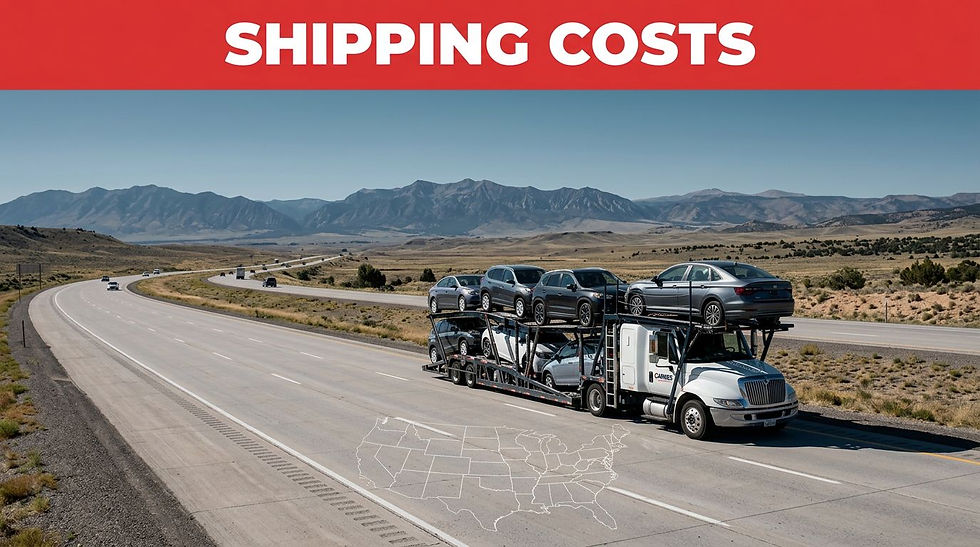
Open transport is the type of trailer most people picture when they think about car hauling. It is the large, two-level trailer carrying several vehicles at once. You may see one on an interstate with sedans, pickup trucks, and SUVs stacked above and below.
Because carriers can move more cars on one trip, open shipping is usually the lower-cost option. There are also more open carriers on the road, which can make scheduling easier on popular routes.
Your vehicle is secured to the trailer, but it is not covered. That means it can be exposed to rain, wind, sun, dust, road spray, and small debris. Think of it like parking your car outside for a long drive. Most of the time, it arrives with no issue beyond normal road dust. Still, the vehicle is exposed to the same conditions as any car traveling down the highway.
Open shipping works well for many situations:
You are moving a daily driver to a new state.
You bought a used car from a dealer or private seller.
You are sending a college student's vehicle across the country.
You need an affordable way to relocate an SUV, truck, or family sedan.
You want more carrier availability and flexible pickup options.
A little dirt at delivery is normal with open transport. A good wash can take care of it. Damage is not considered normal, which is why the pickup inspection matters. The driver records the vehicle's condition on a bill of lading before loading it.
Open transport is not "unsafe" shipping. It is standard auto transport with normal exposure to the road and weather.
If your car is reliable, regularly driven, and not unusually high in value, open transport is often the practical choice. You are paying for transportation, not a private covered garage on wheels.
When Enclosed Vehicle Shipping Makes Sense
Enclosed vehicle shipping puts your car inside a trailer with a roof and solid walls. The vehicle is protected from rain, snow, road grime, falling debris, and direct sunlight during transit.
This option is often used for classic cars, high-end luxury vehicles, exotic sports cars, race cars, antiques, and custom builds. It is also a strong choice for a vehicle with fresh paint, a low front splitter, or a condition you want to preserve as closely as possible.
Enclosed trailers usually carry fewer vehicles than open trailers. Some are designed for only one or a few cars. That added space and protection usually means a higher transport price.
The trailer itself is only part of the reason for the cost. Enclosed carriers have fewer available loads, less room for multiple vehicles, and more specialized equipment. Some offer lift gates or extended ramps for low-clearance cars, though you should confirm that equipment before booking.
An enclosed shipment can be worth the added cost when the vehicle has a larger financial or personal value. A restored 1967 Ford Mustang, a Porsche 911, or a collector car headed to an auction is not the same as a commuter sedan going to a new apartment.
Choose enclosed shipping if any of these points fit your situation:
Your vehicle is rare, collectible, exotic, or highly customized.
It has fresh paint, a ceramic coating, specialty wheels, or delicate bodywork.
It sits low to the ground and needs careful loading.
You are shipping during severe winter weather or through areas with heavy road salt.
You do not want the vehicle visible on an open trailer.
You would rather pay more for less exposure during transit.
Covered transport does not remove every possible risk. Loading, unloading, traffic delays, and mechanical issues can still happen. It does reduce the day-to-day exposure that comes with an open trailer.
Open vs Enclosed Car Shipping: A Side-by-Side Look
The easiest way to compare these options is to focus on what changes for your vehicle and your budget.
Factor | Open Car Shipping | Enclosed Car Shipping |
|---|---|---|
Trailer type | Open, multi-car carrier | Covered trailer with roof and walls |
Vehicle exposure | Weather, dust, and road debris | Protected from outside conditions |
Typical cost | Usually lower | Usually higher |
Carrier availability | More common nationwide | More limited on some routes |
Best for | Daily drivers and standard vehicles | Classics, luxury cars, exotics, and low-clearance vehicles |
Public visibility | Vehicle remains visible | Vehicle stays out of public view |
Loading options | Standard ramps | May include lift-gate or specialty loading equipment |
For most people, the cost difference is the deciding point. Open shipping is usually the sensible option when a clean car wash at delivery is not a concern.
Enclosed shipping is less about showing off a valuable vehicle. It is about reducing exposure when the vehicle's condition matters more than the savings. If a chipped bumper, salt residue, or unexpected road debris would create serious stress, the covered option may be easier to justify.
Don't assume every expensive car needs an enclosed trailer, either. Some owners ship luxury SUVs and newer vehicles on open carriers every day. The better question is simple: how much risk are you comfortable accepting during the trip?
Your Route, Vehicle, and Timing Also Affect the Choice
The trailer type matters, but it is not the only part of your shipment. A carrier looks at the route, vehicle, pickup area, delivery area, and requested dates.
Long-distance routes between major cities often have more carrier traffic. Rural pickups, remote delivery locations, and less common routes can take longer to schedule. Enclosed availability may be more limited because there are fewer enclosed trucks operating at one time.
Vehicle size also matters. A full-size pickup, oversized SUV, lifted truck, or vehicle that does not run may need extra planning. Be honest when requesting a quote. A carrier needs the correct vehicle details to assign enough space and use the right equipment.
Door to door vehicle transport is often available with either trailer type. The driver picks up and delivers as close to your address as local roads safely allow. Large car carriers need room to turn, park, and load. If your street has tight corners, low branches, narrow lanes, or parking restrictions, you may meet the driver at a nearby wide parking lot.
Timing can affect the price as well. Flexible pickup dates give a carrier more room to match your vehicle with an available load. Expedited shipping can help when time is tight, but it may cost more.
Before booking, ask direct questions:
Is the quote for open or enclosed transport?
Is the carrier licensed and insured for auto transport?
What insurance coverage applies while the vehicle is in transit?
Does the carrier have equipment for a low-clearance or non-running car?
What pickup window should you expect?
Will you receive updates while the vehicle is moving?
Clear answers matter more than a vague low quote. A price that sounds too good may leave out details you need to know.
Prepare Your Vehicle Before Pickup
A few simple steps can make delivery easier, no matter which transport option you choose. Wash the vehicle enough to see its current condition. Take clear photos of all sides, wheels, roof, glass, and any existing scratches or dents.
Remove personal items unless your transport company confirms they are allowed. Auto carrier insurance normally covers the vehicle, not boxes, electronics, clothing, or other belongings left inside. Also remove toll tags, secure loose accessories, and keep the fuel level around one-quarter full.
At pickup, walk around the vehicle with the driver. Review the condition report before signing it. Do the same thing at delivery before you accept the car.
This paperwork may feel routine, but it gives both sides a clear record. If you notice new damage, document it on the bill of lading before the driver leaves.
Choose the Protection That Matches the Vehicle
Open transport is the right fit when you want reliable shipping at a lower cost and normal road exposure does not concern you. Enclosed shipping is the better fit when your vehicle needs greater protection or has a condition you do not want to risk.
The best choice is not always the most expensive one. It is the option that matches your vehicle, route, budget, and peace of mind. When you are ready to compare transport options, US Car-Go Freight can help you request a quote for the service that fits your shipment.

Comments